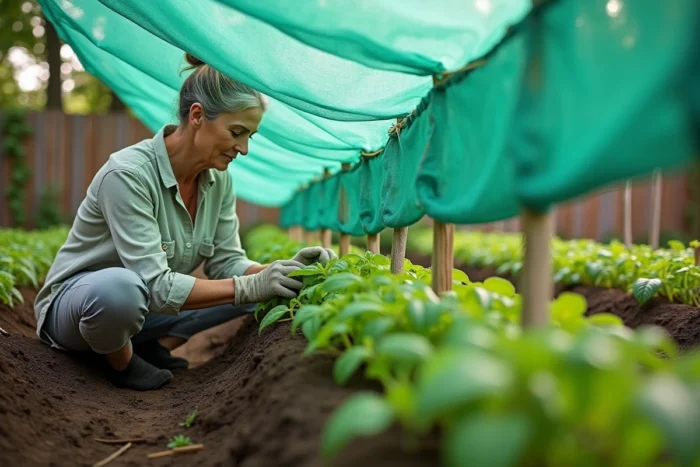
The shade net for tomatoes reduces direct solar radiation on the plants by filtering part of the light. Its main role is not to create shade in a decorative sense, but to limit thermal stress that blocks fruit setting when the temperature exceeds a certain threshold. The filtration rate, the color of the mesh, and the timing of when the net is installed directly affect growth, fruit quality, and the occurrence of certain diseases.
Thermal stress in tomatoes: the threshold that justifies a shade net
Tomatoes slow down their development when the air temperature exceeds 30 °C. Beyond this threshold, pollination becomes difficult, flowers abort, and already formed fruits may show sunburn or uneven ripening. The shade net acts as a thermal regulator, not just as a simple sunscreen.
Gardeners and market gardeners report that they only install the net on days exceeding 30 °C or during heatwave alerts, then remove it as soon as temperatures drop. This event-based management avoids hindering growth at the beginning or end of the season when light remains the limiting factor.
To choose a shade net for tomatoes suitable for their garden, this principle of temporary installation changes the purchasing logic: it is better to have a net that is easy to install and remove than an oversized permanent device.
Leaving a net in place from March to October reduces photosynthesis for entire weeks when the plants would need maximum light. Spot shading protects without sacrificing the yield during cooler periods.
Shade percentage for tomatoes: what rate to choose in the vegetable garden
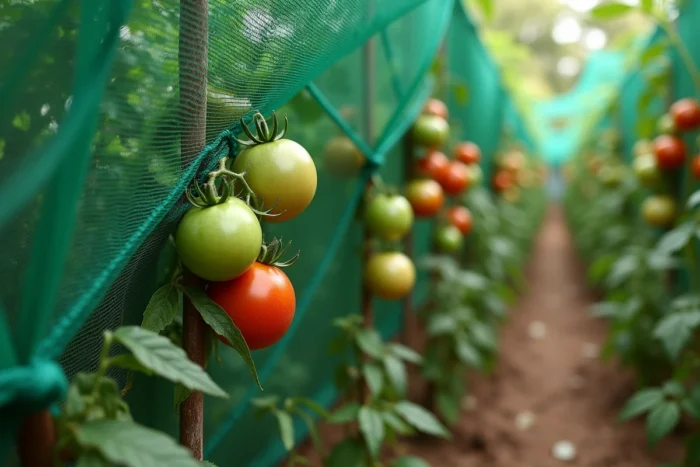
The shade percentage indicates the portion of solar light blocked by the net. A 40% net allows 60% of the radiation to pass through. For tomatoes grown outdoors, the useful range is between 30% and 50% shading.
- A rate around 30% is suitable for regions where heatwaves are occasional. It mitigates peaks without noticeably reducing brightness the rest of the time.
- A rate of 40% to 50% is aimed at gardens in the south of France or very exposed terraces, where the sun beats down for several hours in a row during summer.
- Beyond 50%, the risk of slowing down ripening and encouraging fungal diseases (downy mildew, botrytis) increases, as the foliage dries more slowly after rain or watering.
An overly opaque net produces the opposite effect of what is desired: smaller fruits, slow ripening, and foliage that remains damp. The tomato remains a full-sun plant that needs several hours of direct radiation per day, even in summer.
Special case of greenhouses and tunnels
Under cover, the temperature rises faster than in open fields. A net placed on the outside of the greenhouse blocks heat before it accumulates under the plastic or glass. The shade rate can then increase slightly compared to outdoors, as the structure already concentrates the radiation.
Color of the shade net: black, red, or white for tomatoes
The color of the mesh is not an aesthetic choice. Colored nets filter different wavelengths, which alters the quality of the light received by the plants, not just its quantity.
The black net remains the most common in the vegetable garden. It absorbs radiation uniformly and offers a good balance between thermal protection and price. The black net is suitable for the majority of gardens in temperate climates.
Red nets transmit more light in the red and far-red spectrum. Field observations suggest that this spectral modification can enhance fruit coloration and sugar content. White or reflective nets, on the other hand, reflect part of the radiation instead of absorbing it, which limits temperature rise under the net more effectively than black. A white or reflective net reduces heat better than a black net at the same shade rate.
For a family vegetable garden, the black net at 30-40% remains the most versatile choice. Colored nets are more interesting on larger surfaces or for gardeners looking to optimize the taste quality of their harvests.
Installation and fixing of the net above tomato plants
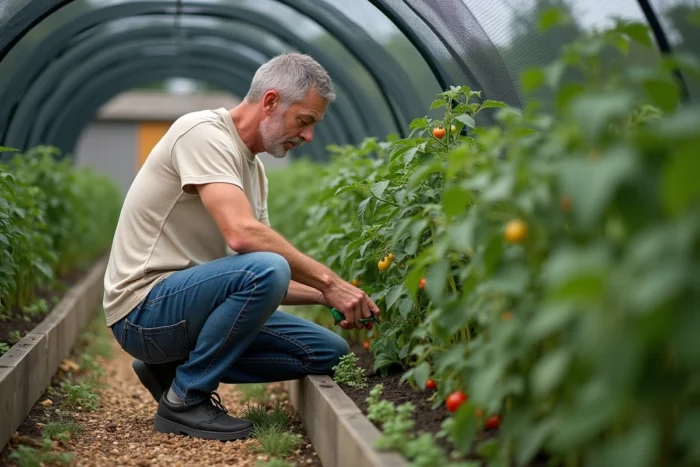
The net must be stretched to a sufficient height so as not to touch the tops of the plants. Indeterminate tomatoes often reach over one and a half meters in mid-summer. Allowing a margin above prevents the foliage from sticking to the mesh and ensures air circulation.
- Use stakes, low tunnel hoops, or the existing structure of a pergola to stretch the net without it sagging under its own weight or the wind.
- Secure the edges with clips, eyelets, or quick ties that allow the net to be removed in a few minutes when the temperature drops.
- Leave the sides open to maintain lateral air circulation, which limits stagnant humidity and reduces fungal pressure on the foliage.
A poorly ventilated net creates a humid microclimate conducive to downy mildew. The goal is to filter the sun from above without turning the space into a sauna. Lateral ventilation is just as important as the shade rate.
When to install and remove the net
In practice, the net is installed as soon as the first heatwaves are announced, generally between June and early July depending on the regions. It is removed in September, when temperatures drop below the critical threshold and the declining light becomes the limiting factor for the ripening of the last fruits.
Monitoring the weather a few days in advance remains the best strategy. A net installed too early in the season deprives the plants of light when the heat does not yet justify protection. A net installed too late allows the first heat episodes to damage the flowers and compromise the summer harvest.