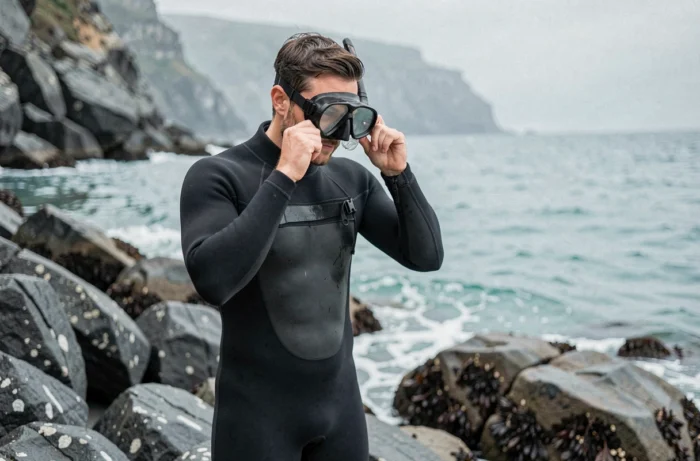
A water sports equipment is defined by its ability to protect the practitioner while allowing them to move freely in or on the water. This basic function remains the same from paddleboarding to jet skiing, but the regulatory and technical requirements vary depending on the distance from the shore, the speed of the craft, and the water temperature.
Neoprene mandatory on fast crafts: what Division 240 has changed
Since the amendment of the Division 240 effective at the end of 2023, wearing a neoprene garment of at least 2 mm has become mandatory for jet ski practitioners and several sliding crafts beyond 300 m from a shelter. This requirement adds to the individual buoyancy equipment already required.
The neoprene suit then serves a dual purpose: thermal protection against cooling in case of prolonged immersion, and mechanical protection of the torso and abdomen during a high-speed impact. A shorty is sufficient in the Mediterranean summer, but a full 3/2 mm suit quickly becomes necessary in the Atlantic or the English Channel starting in spring.
For practitioners looking for equipment available at H2O Sport, this regulatory constraint guides the first purchase: the suit takes precedence over the board or accessories.
Kill switch and buoyancy: two safety devices not to be confused
The kill switch is a mechanism that cuts the engine as soon as the pilot is ejected. On a jet ski or motorboat, it takes the form of a cord connected to the wrist or life jacket. Recent texts emphasize the obligation to keep it connected at all times while navigating, including at low speeds.
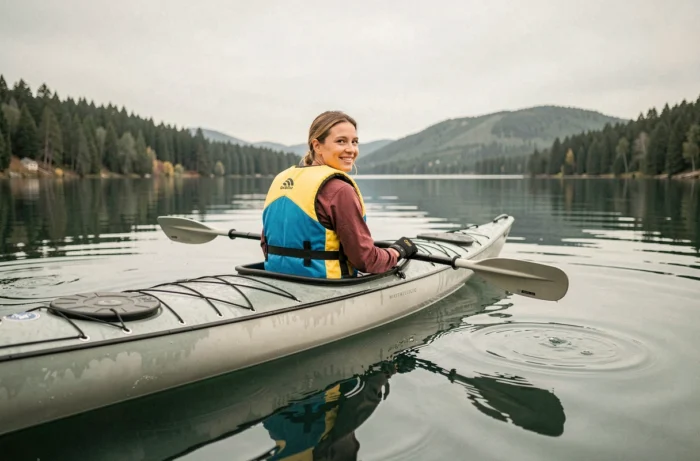
The buoyancy vest, on the other hand, does not protect against ejection but against drowning. French regulations distinguish several levels of buoyancy depending on the distance to a shelter:
- Up to 2 nautical miles from a shelter, a buoyancy aid of at least 50 N is required for each person on board.
- Beyond 2 nautical miles, a life jacket of 100 N or more becomes mandatory, with automatic turning for offshore navigation.
- For towed sports (buoy, wakeboard, water skiing), a specific jacket approved for the activity is required, as it must absorb shocks while maintaining buoyancy.
A standard recreational vest is not suitable for water skiing, and vice versa. Checking the standard indicated on the label (EN ISO 12402) before purchase avoids navigating with equipment unsuitable for actual practice.
Choosing a surfboard or paddle based on body type
The size and volume of a board directly affect stability and maneuverability. An inflatable paddle of large width (over 80 cm) provides a stable platform for a beginner or a heavier person but becomes difficult to maneuver in crosswinds.
Volume and liters: the often-overlooked technical criterion
The volume in liters of a board determines its buoyancy. For paddleboarding, a simple ratio guides the choice: the volume should represent about double the weight of the practitioner in kilograms for recreational use. An experienced surfer will go well below this ratio to gain responsiveness.
In surfing, the logic partially reverses. A low-volume shortboard requires solid paddling and take-off technique. Foam boards, which are bulkier, remain the best compromise for progressing without risking injury from a collision with the board itself.
Rigid or inflatable: a trade-off between transport and performance
A rigid board (epoxy, fiberglass) transmits paddling energy better and glides more efficiently. An inflatable board can be packed into a backpack and transported by train or plane. The inflatable does not replace the rigid in performance, but it makes practice possible where storage is a constraint.
Diving and snorkeling equipment: mask, fins, and regulator
The mask remains the most personal piece of underwater equipment. A poorly fitting mask causes constant water entry that spoils the outing. The seal test is done dry: press the mask against the face without putting on the strap, inhale through the nose. If it holds on its own, the internal volume matches the facial morphology.
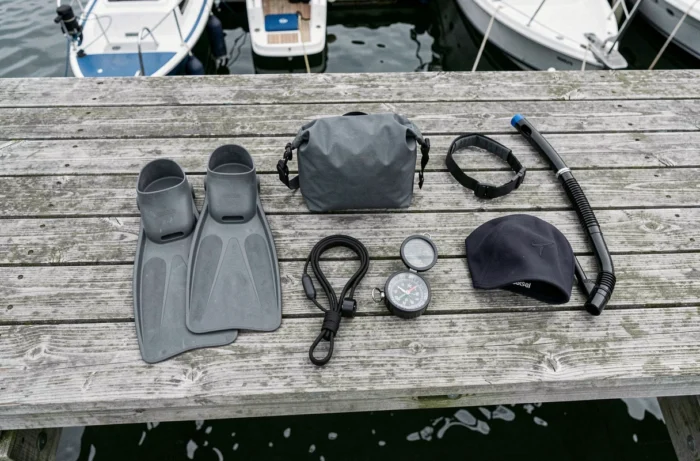
The fins are chosen based on the type of swimming. Short, flexible fins are suitable for snorkeling and surface swimming. Long, rigid fins, known as foot pockets, are designed for scuba diving where propulsion must compensate for the weight of the equipment.
- For snorkeling: panoramic mask, dry snorkel (with anti-wave valve), adjustable short fins.
- For scuba diving: low-volume mask, EN 250 certified regulator, foot pocket fins with long blades.
- For spearfishing: very low volume mask, long carbon or fiber fins, and a weight belt suitable for the thickness of the wetsuit.
The scuba regulator transforms the high-pressure air from the tank into breathable air at ambient pressure. Its maintenance (annual revision, rinsing with fresh water after each sea outing) directly affects the reliability of the equipment at depth.
Sailing and light navigation: the textile layers that make the difference
In sailing, the three-layer system remains the reference for managing moisture and cold. The first layer wicks away sweat (polyester or merino wool). The intermediate layer insulates (fleece or Primaloft). The outer layer protects against wind and spray (quarter jacket with waterproof-breathable membrane).
Layering these three functions prevents hypothermia during prolonged navigation, even in summer, when the apparent wind cools the body wet from spray. A coastal quarter jacket is sufficient in a dinghy or sports catamaran. For offshore cruising, a jacket with sealed seams and a high collar becomes necessary.
Non-slip deck shoes complete the ensemble. They protect against slipping ropes, winches, and slippery surfaces. Fingerless sailing gloves reduce blisters during repeated maneuvers without sacrificing tactile sensitivity on the lines.
The choice of each piece of equipment ultimately depends on three variables: the discipline practiced, the distance from the shore, and the water temperature. These three parameters, crossed with the current regulations, determine the minimum level of protection. The rest is a matter of personal comfort and budget.