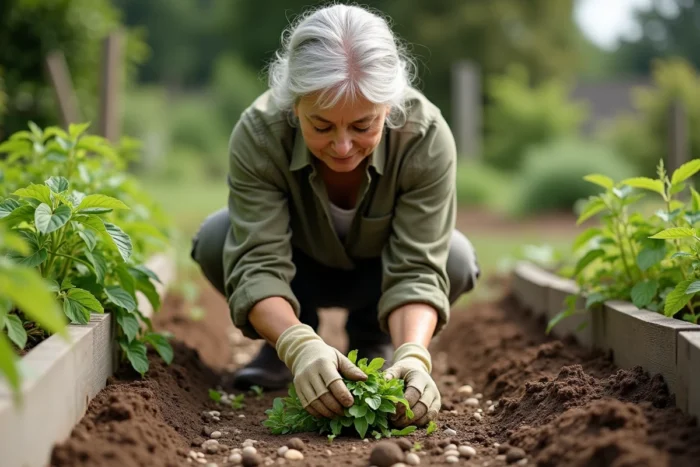
Purslane (Portulaca oleracea) colonizes compacted and warm soil within a few weeks. Its ability to reproduce by stem fragments and seeds simultaneously makes it tougher than most summer annual weeds. We recommend a combined strategy, as no isolated method can effectively tackle its seed bank in the long term.
Reproductive cycle of purslane and intervention window
Purslane germinates as soon as the soil temperature exceeds around fifteen degrees at the surface. Flowering can start very quickly after emergence, and each plant produces a considerable number of viable seeds that remain dormant in the soil for several years.
The most effective intervention window is at the cotyledon stage, before the plant exceeds a few centimeters. At this stage, the stems have not yet developed the ability to root when in contact with moist soil. Waiting for flowering means feeding the seed bank for the following seasons.
One point we often observe in the field: a plant pulled but left with its roots up on moist soil can regrow. Knowing how to get rid of purslane starts with understanding this vegetative resilience, which distinguishes this plant from a typical weed.
Pulling purslane before seed set: method and common mistakes
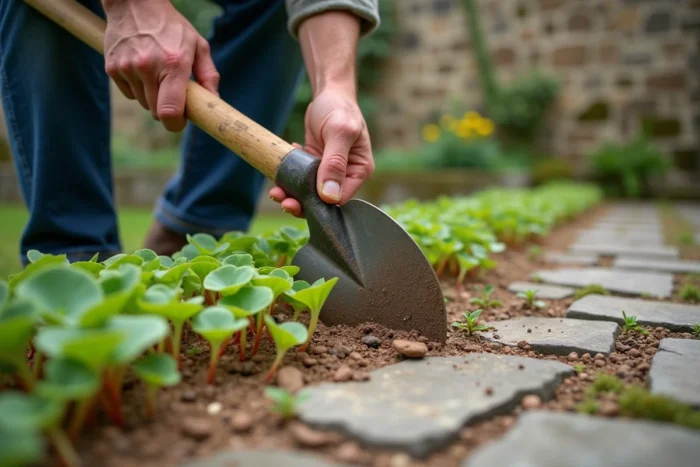
Hand pulling remains the most reliable method in the vegetable garden. The non-negotiable condition: intervene before seed capsule formation. A shallow hoeing in dry weather, early in the morning, is enough to uproot young plants.
The most common mistake is to hoe in overcast weather or after rain. Stem fragments cut close to the ground can root again within a few days if the soil remains moist. In dry and sunny weather, the cut pieces dry out on the surface before they can regrow.
Turning pulled purslane into on-site mulch
Rather than exporting the biomass to compost (where the heat is not always sufficient to neutralize the seeds), an emerging practice is to turn the pulled plants upside down at the foot of the crops. This plant mulch decomposes quickly, covers bare soil, and limits the germination of new weeds.
This technique works provided the plants have not yet produced mature seeds. If capsules are visible, it is better to remove the entire plant from the vegetable garden.
Mulching and weed fabric: preventing purslane germination
Purslane germinates on bare and compacted soil. Eliminating these conditions cuts the cycle at the source. Two complementary approaches:
- A thick organic mulch (straw, wood chips, dead leaves) maintained at a sufficient thickness to block light at the soil level. The thickness must be dense enough to prevent seedlings from breaking through.
- A woven mulch fabric, laid over uncultivated areas or between rows. It blocks germination while allowing water to pass through. Prefer a dense enough weight to withstand UV rays over several seasons.
- A false seeding before planting: work the soil superficially, let purslane germinate, then destroy the seedlings with a second hoeing pass before sowing or planting crops.
False seeding drastically reduces weed pressure from the first season. We systematically recommend it on historically infested plots.
Thermal weeding of purslane: when and how to use it
Thermal weeding works on purslane at the young stage. The fleshy, water-filled leaves burst under the thermal shock, destroying the plant without disturbing the soil.
The pass must be quick: the goal is not to burn the plant but to induce cellular shock. A single slow and steady pass is sufficient at the cotyledon stage. On more developed plants, the effectiveness drops significantly, as the thick stems retain enough water to survive.
Thermal weeding has an advantage over hoeing: it does not bring new seeds to the surface. In soil where the seed bank is significant, this difference matters.
Limitations of thermal weeding on moist soil
On wet soil, thermal energy is absorbed by the water in the soil before reaching the plant cells. The result is an ineffective pass that consumes gas without destroying the seedlings. Intervening in dry weather significantly improves the destruction rate.
Purslane as a cover crop: an alternative to total weeding
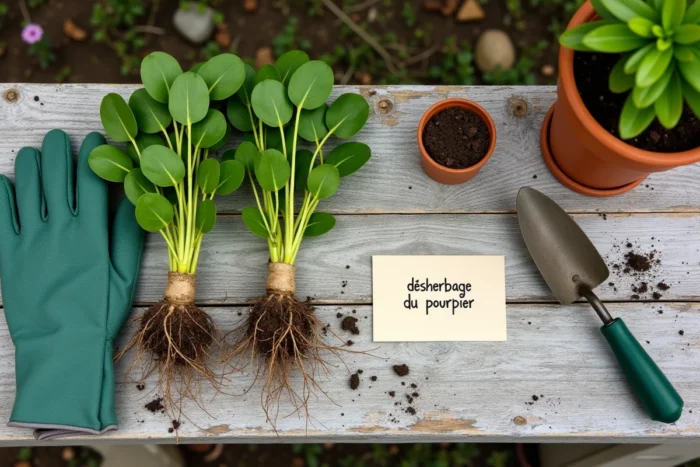
Some experienced market gardeners and gardeners choose to keep purslane between robust crops (staked tomatoes, squash, corn). Its shallow root system competes little with well-established plants, and its dense cover limits the germination of more problematic weeds like lamb’s quarters or amaranth.
This approach assumes containing purslane by mowing it before flowering to prevent seed production. Purslane then plays a role as a temporary living cover that reduces evaporation and protects soil structure during hot periods.
The decision to tolerate or eliminate purslane depends on the context of each plot. In an intensive vegetable garden with short rotations, tolerance is rarely viable. On high-crop beds with well-mulched soil, controlled purslane can become an ally rather than a problem. The key remains the same: intervene before seed set, regardless of the chosen strategy.