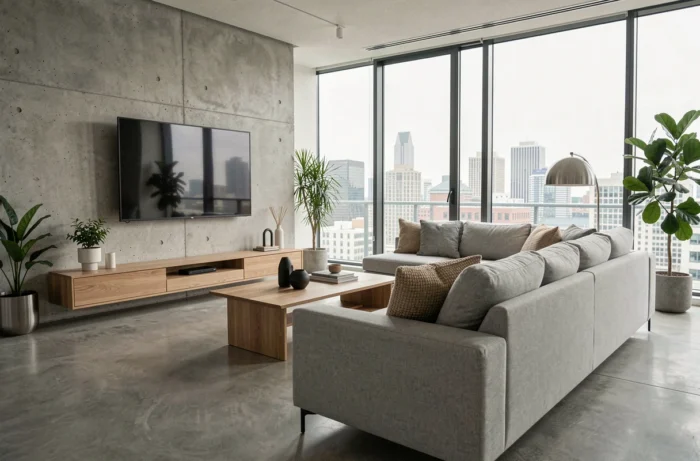
Equipping a modern home is not just about choosing furniture and a few light fixtures. Recent European regulations, the transition to low global warming potential refrigerants, and the requirements of the Energy Performance Certificate (DPE) are reshaping the list of equipment to prioritize. We review the technical aspects that truly determine the comfort and value of a home.
Refrigerants and F-Gas III regulation: choosing a heat pump or air conditioner with knowledge
The European regulation F-Gas III (EU 2024/573), effective from March 11, 2024, imposes a strict timeline for phasing out fluorinated gases with high global warming potential. For a homeowner equipping today, ignoring this timeline is akin to buying a potentially unsellable second-hand device in a few years.
Since January 1, 2025, monosplits containing less than 3 kg of refrigerant with a GWP of 750 or higher (typically R410A) can no longer be sold new. Starting January 1, 2027, air-to-water bi-block heat pumps of 12 kW or less must use a refrigerant with a GWP below 150, which excludes most R32 models.
In 2029, this same threshold will apply to residential split air conditioners and air-to-air heat pumps. We recommend selecting equipment that operates on R290 (propane) or a refrigerant with a GWP below 150, as this is the only guarantee of compliance in the medium term.
In practice, when consulting an installer, check the technical data sheet of the refrigerant before comparing COPs or sound levels. A high-performance R32 device purchased in 2026 will pose maintenance issues as the quotas for this gas decrease in the European market.
For those looking to centralize their research, all the equipment for the home covers both heating solutions and furniture or interior design, allowing for a cross-examination of criteria before purchase.
Energy performance of the home: DPE and insulation before home automation
Installing a connected thermostat in a home rated F or G on the DPE will not fix a thermal sieve. The technical priority remains the building envelope: attic insulation, replacement of single-glazed windows, and treatment of thermal bridges in the ground floor.
A home rated F or G will no longer be rentable starting in 2028 (class G from 2025, class F from 2028 according to the planned timeline). This regulatory constraint turns insulation into a non-negotiable investment, even for an owner-occupier considering resale.
Prioritizing insulation measures based on cost-effectiveness
- Lost attics remain the most cost-effective measure: heat loss through the roof represents the highest share in an uninsulated single-family home, and the cost per square meter is the lowest of all measures.
- Replacing single-glazed windows with double glazing with enhanced insulation simultaneously improves acoustic and thermal comfort, a criterion often underestimated in urban areas.
- Insulating walls from the inside (external insulation is not always permitted in protected areas) requires special attention to moisture treatment to avoid condensation issues.
- Insulating heating and hot water networks in the basement, often overlooked, reduces distribution losses for a marginal cost.
Once the envelope is treated, home automation makes sense: a programmable thermostat controlling a properly sized heat pump in a well-insulated home generates real savings on heating bills.
Designing living spaces: kitchen, bathroom, and multifunctional areas
The interior design of a modern home relies on the versatility of spaces. Monofunctional rooms (separate dining rooms, closed offices) are giving way to open configurations where every square meter serves multiple roles.
Open kitchen: ventilation and extraction before the countertop
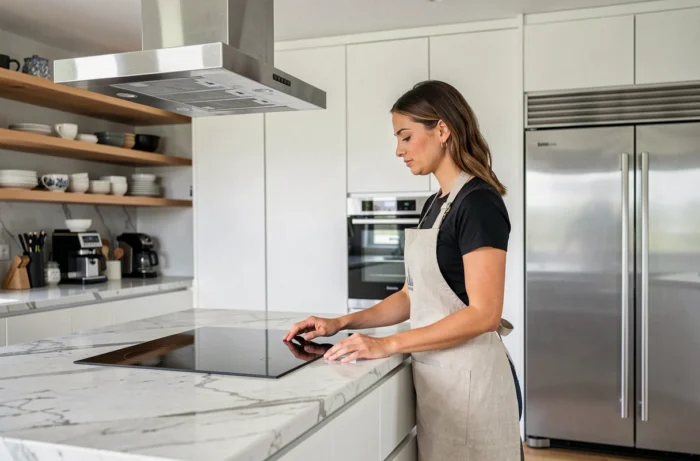
An appropriately sized external extraction hood is the first piece of equipment to plan in an open kitchen. Without it, cooking odors and humidity migrate into the living space, degrading indoor air quality and accelerating the aging of finishes.
We observe that many projects first select the central island or countertop, then adapt the extraction at the end of the project. It should be the other way around: the diameter of the duct, the power of the motor, and the evacuation route determine the placement of the cooking station.
Bathroom: Hygro B VMC and thermostatic faucets
In the bathroom, the hygro-regulated mechanical ventilation system type B adjusts the extraction rate to the actual humidity level of the room. This system limits the overconsumption of a self-regulating VMC that runs at a constant flow rate, even when the room is unoccupied.
On the faucet side, a thermostatic mixer stabilizes the temperature to within one degree, reducing the waste of hot water associated with manual adjustments. In a shower used daily by several people, the cumulative savings in water and energy are significant.
LED lighting and centralized control: what really changes daily life
Lighting is often an underestimated aspect during the design phase. Planning only a central ceiling light per room is a comfort and ambiance mistake.
An effective lighting plan layers three levels: general lighting (ceiling light or recessed spots), functional lighting (countertop, desk, bathroom mirror), and ambient lighting (indirect LED strips, accent lamps). Each level should be independently controllable.
- Variable temperature LED bulbs (2,700 K in the evening, 4,000 K during the day) adapt to activities without multiplying fixtures.
- A dimmer per circuit allows for reduced actual consumption and extends the lifespan of LED sources.
- Connected switches using Zigbee or Matter protocols avoid complete rewiring and integrate into an evolving home automation ecosystem.
The Matter protocol, supported by major manufacturers, ensures interoperability between brands and limits the risk of being locked into a proprietary ecosystem. This is a selection criterion to check before investing in connected switches or gateways.
Equipping a modern home involves technical choices that are often invisible in consumer catalogs. Refrigerant, envelope performance, air extraction, home automation protocol: these choices determine real comfort and the property’s value at resale much more than the finish of a countertop or the design of a light fixture.